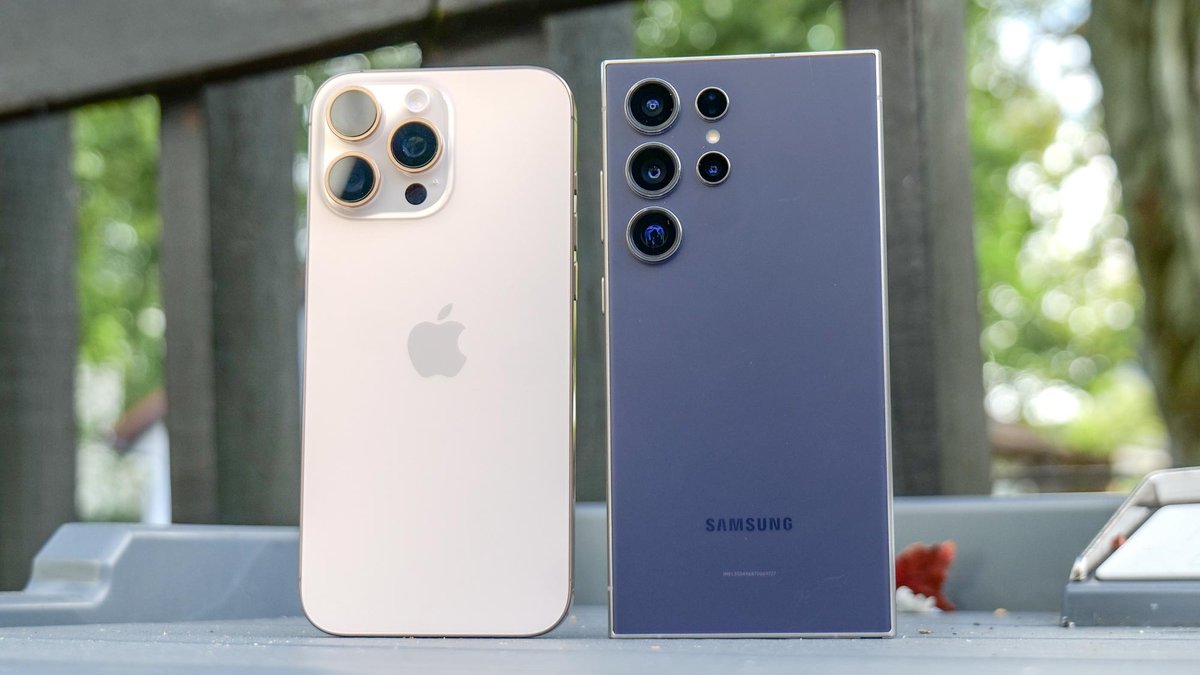
iPhone 16 Pro Max vs. Top Android Flagships: Head-to-Head Battle
The smartphone landscape in 2025 is more competitive and innovative than ever, presenting a fascinating dilemma for anyone seeking the absolute best. When it comes to the "iPhone 16 Pro Max vs. Top Android Flagships," you're not just comparing phones; you're weighing entire ecosystems, philosophies, and a new generation of AI-driven capabilities. Whether you're an Apple loyalist curious about the other side, or an Android enthusiast considering a jump, understanding where these titans stand is crucial. This isn't just about specs; it's about how these devices fit into your life, enhance your work, and capture your memories.
At a Glance: Picking Your Flagship Champion
- For Pure Power & Consistency: The iPhone 16 Pro Max excels with its A-series Pro chip, delivering unmatched raw single-core performance and best-in-class video recording, all within a seamlessly integrated ecosystem.
- For Unrivaled Zoom & Vivid Photography: The Samsung Galaxy S25 Ultra offers a powerful Snapdragon chip, a groundbreaking multi-telephoto camera system with extreme zoom, and stunningly vibrant photos, often bundling the versatile S Pen.
- For Cutting-Edge AI & Computational Photography: The Google Pixel 10 Pro (or 9 Pro XL) stands out with its Tensor chip, purpose-built for AI, providing unparalleled low-light photography, advanced real-time AI features, and a clean Android experience.
- For Ultimate Customization & Charging Speed: Other premium Android flagships from brands like Vivo, Xiaomi, and Oppo bring unique camera partnerships (Zeiss, Leica), massive battery capacities, and blistering fast charging that leaves the iPhone in its dust.
The Brains of the Operation: Processing Power & AI Smarts
Underneath the sleek glass and metal, the processing unit is the true engine of your smartphone. In 2025, this isn't just about raw speed anymore; it's about how efficiently that power handles demanding tasks, especially the burgeoning world of on-device Artificial Intelligence.
The iPhone 16 Pro Max comes armed with Apple's latest A-series Pro chip (likely the A19 Pro or A18 Pro), often built on a bleeding-edge 3nm process. This chip isn't just fast; it’s an absolute beast in single-core performance, setting the industry benchmark year after year. What truly elevates the iPhone's performance isn't just the hardware, but Apple's deep, unified iOS optimization. This ensures sustained performance even under heavy loads – think editing 4K HDR video on the go, running graphically intensive games for hours, or crunching data in professional applications – all while maintaining remarkable power efficiency. If you need a device that won't stutter and delivers consistent, pro-grade power for virtually any task, the iPhone is a formidable contender.
On the Android side, the top flagships largely lean on Qualcomm's Snapdragon chips, such as the Snapdragon 8 Gen 4 or the rumored Snapdragon 8 Elite. Devices like the Samsung Galaxy S25 Ultra leverage this silicon for phenomenal multi-core performance and exceptional GPU power, making them prime choices for hardcore mobile gamers and power users. These chips are designed to push boundaries, especially when it comes to graphics rendering and heavy multitasking.
Then there's Google's unique approach with its Tensor chip, found exclusively in the Pixel 10 Pro (or 9 Pro XL). Unlike Apple and Qualcomm, Google's Tensor isn't primarily about winning raw benchmark wars. Instead, it's custom-designed from the ground up for on-device machine learning and AI. This specialized architecture allows the Pixel to excel in real-time, AI-intensive tasks: think instantaneous, hyper-accurate live transcription, advanced photography computations, and a suite of generative AI features like Gemini Live or Pixel Studio that can transform your photos and interactions in ways other phones can't quite match. For tasks where the phone thinks on its behalf, the Pixel's Tensor chip has a distinct, often mind-blowing, edge.
The Bottom Line: If pure, unadulterated speed and best-in-class mobile gaming performance are your non-negotiables, the iPhone 16 Pro Max or a Snapdragon-equipped Android like the Galaxy S25 Ultra will serve you well. However, if cutting-edge AI features and computational photography are at the top of your list, Google Pixel's Tensor chip delivers an experience that feels genuinely futuristic.
Capturing the World: Camera Capabilities Compared
In the era of visual storytelling, a smartphone's camera is often its most scrutinized feature. All modern flagships offer pro-grade quality, but they achieve it through differing philosophies and hardware strengths.
The iPhone 16 Pro Max typically features a robust 48MP main sensor and a 5x telephoto zoom lens. Apple's camera philosophy prioritizes impeccable color accuracy, shot-to-shot consistency, and arguably the industry's best-in-class video recording. Features like Cinematic Mode (which intelligently shifts focus for a film-like depth effect) continue to evolve, making the iPhone the go-to device for aspiring filmmakers and anyone who values reliable, true-to-life footage. If your social feed or professional work demands high-quality, stable video, the iPhone 16 Pro Max remains the gold standard.
Stepping into the Android arena, the Samsung Galaxy S25 Ultra often takes a more aggressive approach to hardware. It boasts an ultra-high 200MP main sensor, capturing incredible detail, and an industry-leading multi-telephoto system – often combining a 3x optical zoom with a 10x or 5x folded zoom lens. This combination delivers truly exceptional zoom capabilities, culminating in its famed (and often debated) 100x Space Zoom. Samsung's processing leans towards bright, vivid colors that pop, making photos instantly appealing and social media-ready. Plus, the ability to record in stunning 8K resolution offers unmatched detail for those with compatible displays. For sheer versatility, incredible zoom range, and eye-catching vibrant images, the Galaxy Ultra is a powerhouse.
Then there's the Google Pixel 10 Pro (or 9 Pro XL), which often features a 50MP main sensor and a 5x telephoto zoom. Google's magic lies less in raw megapixel count and more in its unparalleled computational photography. The Pixel's camera, heavily integrated with its Tensor AI chip, excels in producing natural tones and truly shines in challenging lighting conditions, delivering phenomenal low-light performance with its renowned Night Sight feature. Where other phones struggle, the Pixel often pulls out details and colors with remarkable clarity, making it a favorite for night owls and those who prefer a more true-to-life, "natural" photo aesthetic.
Beyond these three giants, other Android flagships carve out their niches:
- Vivo X200 Pro: Known for its impressive 200MP Zeiss-partnered camera, pushing the boundaries of detail and optical quality.
- Xiaomi 15 Ultra: Often features a Leica-powered quad-camera system, offering unique photographic styles and advanced manual controls.
- Oppo Find X8 Pro: Typically includes a versatile setup with strong wide-angle, ultrawide, and optical zoom cameras, focusing on a balanced photographic experience.
The Bottom Line: For consistent, color-accurate photos and best-in-class mobile videography, the iPhone 16 Pro Max is hard to beat. If you crave extreme zoom capabilities, high-megapixel detail, and punchy, vivid colors, the Samsung Galaxy Ultra is your go-to. For unparalleled low-light performance, natural tones, and AI-driven photographic enhancements, the Google Pixel Pro leads the pack.
Power Through Your Day: Battery Life & Charging Speed
No matter how powerful or smart your phone is, it's useless if it's dead. Battery life and charging speed are critical considerations, and here, the competition offers some stark differences.
The new iPhone 16 Pro Max models consistently offer exceptionally strong battery life. Thanks to Apple's meticulous chip optimization and iOS efficiency, the Pro Max variant is often a contender for the longest-lasting flagship, reliably delivering an all-day charge, even for heavy users. You might find yourself forgetting your charger at home without worry. However, when it comes to wired charging speed, Apple, while improved (e.g., 27W), generally lags behind its Android counterparts. While "fast," it's not "blazing fast."
Leading Android phones, conversely, offer a much more varied battery experience. Some, especially gaming-focused models or those with massive capacities (5000mAh+), can push into multi-day use. But the real game-changer on the Android side is wired charging speed. It's not uncommon to find Android flagships with blazing fast wired charging (e.g., 45W, 65W, or even stratospheric 120W+ speeds) that can juice up your phone from empty to full in under an hour, sometimes in as little as 15-20 minutes. This level of rapid replenishment fundamentally changes how you think about charging, allowing for quick top-ups instead of overnight charges.
Both platforms have now largely standardized on USB-C, a welcome change that simplifies cable management across your devices.
The Bottom Line: When it comes to raw charging speed, Android flagships overwhelmingly take the crown, offering convenience that's hard to dispute. However, if you prioritize sheer, long-lasting endurance, the largest iPhone models, particularly the iPhone 16 Pro Max, frequently compete for the best overall battery longevity.
The Digital Foundation: Operating System & Ecosystem
Beyond the hardware, the software and the surrounding digital ecosystem define your daily experience with a smartphone. This is where Apple and Android diverge significantly, each offering compelling advantages.
Apple's iOS, running on the iPhone 16 Pro Max, is renowned for its superior security and privacy features. Apple controls both hardware and software, allowing for tightly integrated security protocols that are difficult to breach. Furthermore, Apple provides timely software and security updates for an impressive 5-6 years, ensuring your device remains relevant and secure for a long time. The iOS user experience is famously consistent, refined, and exceptionally user-friendly, prioritizing simplicity and ease of use. If you own other Apple products – a Mac, iPad, or Apple Watch – the integration is seamless and powerful, with features like AirDrop for instant file sharing, Handoff for continuing tasks across devices, and Continuity for unified calls and messages. This interconnected ecosystem is a major draw for many, offering a cohesive and often magical user experience.
On the other side, Android, particularly on leading flagships, offers maximum customization. You have the freedom to change launchers, widgets, icon packs, and deeply personalize the overall look and feel of your device. This open nature also means a vast array of hardware options, price points, and unique features that simply don't exist in Apple's walled garden. We're talking about expandable storage slots (on some models), stylus support like Samsung's versatile S Pen, and innovative form factors such as foldable designs. Google's deeper, system-level AI integration, particularly in the Pixel line, provides advanced features like Call Screening (which screens unknown callers for you) and Magic Editor (which can intelligently manipulate photos) that currently surpass Siri's capabilities. Interestingly, some Android manufacturers like Samsung are stepping up their software game significantly; the Galaxy S25 Ultra, for instance, is anticipated to offer a remarkable 7 years of software and security updates, matching or even exceeding Apple's longevity in some cases.
The Bottom Line: If you value superior privacy, robust security, a consistently refined and user-friendly experience, and seamless integration with other Apple devices, iOS on the iPhone 16 Pro Max is ideal. If you crave maximum customization, a wider range of hardware features (like stylus support or foldables), advanced Google AI integrations, and the open nature of Android, a leading Android flagship will feel more liberating.
Beyond the Screen: Build Quality, Price & Enduring Value
When you invest in a flagship smartphone, you expect premium materials, durable construction, and a price tag that reflects that quality. All these top-tier devices deliver, but their long-term value propositions can differ.
Whether you choose the iPhone 16 Pro Max or a top Android flagship, you're guaranteed premium build quality. Most come with an IP68 water and dust resistance rating, meaning they can withstand immersion in water, and boast premium materials like aerospace-grade titanium, reinforced glass (like Apple's Ceramic Shield), or sophisticated ceramic finishes. These phones are built to last, both physically and functionally.
However, where they diverge significantly is in price and long-term value. iPhones notoriously maintain a higher resale value over time. An iPhone 16 Pro Max might start around Rs 1,59,900, but when you look to upgrade a few years down the line, you'll likely recoup a larger percentage of your initial investment compared to an Android phone. This strong residual value can make the higher upfront cost more palatable.
Android flagships, while still premium, offer a broader price range. For example, the Samsung Galaxy S25 Ultra might start around Rs 1,29,999, often including the versatile S Pen stylus as part of the package. The Google Pixel 9 Pro XL comes in a bit lower, perhaps around Rs 1,09,999, offering incredible value for its AI capabilities. Other high-end Androids like the Vivo X200 Pro, Oppo Find X8 Pro, and Xiaomi 15 Ultra often hover in the Rs 94,999 - Rs 99,999 range, providing exceptional features at a slightly more accessible price point than their Apple or Samsung counterparts. While this broader range offers more choice, it's generally true that Google Pixels tend to depreciate faster than iPhones, and even Samsung flagships, while strong, typically don't hold their value quite as well as Apple's devices.
The Bottom Line: All these phones are premium and durable. The iPhone 16 Pro Max demands a higher initial investment but often provides a better return through superior resale value. Android flagships offer more price diversity and sometimes include valuable extras like the S Pen, but generally experience faster depreciation.
Making the Call: Which Flagship is Right for You?
Choosing your next flagship smartphone is a personal journey, reflecting your priorities, budget, and how you use technology. There's no single "best" phone, only the best phone for you.
You should choose the new iPhone 16 Pro Max if you prioritize:
- Best-in-class video recording: For content creators, family videographers, or anyone who demands cinematic quality footage from their pocket.
- Consistent photo quality: If you want reliable, color-accurate photos every single time, without needing to tweak settings.
- Unrivaled raw performance: For demanding tasks like high-fidelity gaming, professional video editing, or running complex apps without a hitch.
- Long-term software support (5-6 years): Ensuring your device remains secure, up-to-date, and functional for half a decade or more.
- Seamless ecosystem integration: If you're already invested in Apple products (Mac, iPad, Apple Watch) and value features like AirDrop, Handoff, and Continuity.
- Superior privacy and security: For peace of mind regarding your personal data and digital footprint.
- High resale value: If you frequently upgrade and want to recoup a significant portion of your investment.
- Thinking about making the switch? You might be wondering, Should you buy iPhone 16 Pro Max? We've got a deeper dive into that very question.
You should choose a Leading Android Phone (like the Samsung Galaxy S25 Ultra or Google Pixel 10 Pro) if you prioritize: - Maximum customization and hardware variety: The freedom to personalize your device extensively, and choose from unique features like foldable designs or expandable storage (on select models).
- Industry-leading fast charging speed: If you hate waiting for your phone to charge and want the convenience of incredibly quick top-ups.
- Advanced AI features and computational photography: Especially with the Pixel line, for groundbreaking low-light performance, real-time AI assistance, and intelligent photo editing.
- The best zoom camera available on a smartphone: The Galaxy Ultra's multi-telephoto system offers unmatched magnification for capturing distant subjects.
- Access to the S Pen stylus: If you're a notetaker, artist, or power user who benefits from the precision and functionality of a built-in stylus (Samsung Galaxy Ultra).
- A broader range of price points: To find a premium device that perfectly balances features with your budget.
- Openness and choice: Android's open ecosystem offers unparalleled flexibility in apps, services, and hardware.
Ultimately, the smartphone battle of 2025 isn't about one device reigning supreme, but about different titans excelling in their chosen domains. Your perfect phone is the one that aligns best with your lifestyle, your creative pursuits, and your digital demands. Take stock of what truly matters to you, and you'll find your champion.